Painted Desert

Painted Desert

Sunday, May 24, 2009

Wyoming

The story of my Caribbean adventures will have to continue later because, as many of you know, I have departed for field camp in Wyoming. This is geology field camp, which is a requirement for graduation in most geology programs. Geology is a science that must be practiced in the field to be learned properly, and I am attending a six-week program run by Iowa State University and the University of Nebraska at Lincoln. I know these weeks will be full of exciting things for my readers, and I'm determined to make a blog entry once or twice a week, with plenty of pictures.


Here are my field camp supplies in my hotel room in Ames, IA. In my bags I have clothing for all kinds of weather, camping gear, books and geology things like my rock hammer. I caught an early morning flight out of Hartford (which seems perpetually cheaper than Providence) to Cincinnati and then on to Des Moines, where I was picked up by the ISU department secretary and set up in the fine Best Western in Ames. After my 3 AM wakeup call and hours shuttling around airports, it was a relief to get into this clean and quiet room. I do want you to notice something about it, though:

The sink is the first thing to welcome you when you come in. I have never seen this exact setup in a hotel before, but perhaps sinks are an essential part of midwestern hospitality. Anyway, I quickly took a nap, then changed into my bathing suit. When I saw there were two rowdy boys using the hotel pool, I decided to work out instead, with my new resistance band. So I put on my ipod and began doing bicep curls in my bathing suit. I was hoping my roommate wouldn't walk in... a woman from Michigan arriving at an unknown time.

Eventually two students from Michigan and one from New Jersey arrived, and we all went for a swim and went out to eat together. (These were other people going to the same field camp, not just random students.) The next morning we were picked up by an ISU van and taken to the campus where we rendezvoused with the other ten students who would be making the trip out in the vans. (There were a further ten who were heading directly to Wyoming on their own and whom I would meet later.)

I had been expecting professors to drive the vans, make stops at interesting sites like the badlands or Devil's Tower, and learn things, but instead we were driven out by one (non-geology) professor and a couple of the undergrads, and were to go straight through without stopping to look at any rocks. The professors would be awaiting us at camp. I admit to being disappointed. We could see the stunning, lunar landscape of Badlands National Park in the distance, but couldn't get close; we saw only signs for Mt. Rushmore and Devil's Tower, lurking somewhere there a few small miles from the highway; and worst of all, there was this:

Wall Drug! I don't know what Wall Drug is. I only know that there are approximately 170 billboards for it scattered across Minnesota and South Dakota, not to mention on buses in London, if you believe the billboards in South Dakota, and that Katie (remember Katie?) told me that I have to go to Wall Drug, and that surely we would, and then I would see. Then I would see what Wall Drug is like. But I have no stories of Wall Drug for you, or pictures. I have only my tears.

Another missed opportunity:

The Corn Palace. Need I say more?

Our van, which was very comfortable with only 5 passengers, was unanimously despondent over missing out on these many (only) highlights of South Dakota. We tried to distract ourselves with the radio, but it only served to hammer home our situation. View with sound:


We drove for nine hours, finally entering some interesting landscape as we approached the Black Hills of western South Dakota. We kamped at the KOA in Rapid City, surrounded by vacationing seniors who were all going to see, or had seen, Mount Rushmore.

I must say that the KOA was very nice... they have a breakfast bar thing wherein a person may order all-you-can-eat pancakes for one dollar (plus tax). The average visitor eats 3.4 pancakes. The record is 28 at one sitting. I had 3.

Most of my pictures, taken at van speed, did not turn out that great, so here's a picture I took at the gas station, of a Black Hill.

As we crossed into Wyoming the scenery became more interesting still. We passed many gullies and small landslides called slumps, where the ground had gotten soggy one day and slid a few feet down the hill, leaving a red gash and a bumpy tongue of soil under the grass. Here is one of the gullies, also caused by the ravaging effects of water:

Now, we have lots of water in the Northeast, and we don't see a tremendous number of gullies, or other types of mass wasting. Our bedrocks and sediments happen to be more solid, but climate also plays a role. It isn't water alone that allows land to waste away so much as a combination of water and the vegetation that can be supported on it. An extremely wet climate, such as that of a tropical rainforest, will also see extremely heavy plant growth, and that tends to hold the ground in place. An extremely dry climate like a desert won't see much plant growth, but there's not much rain either, so the amount of erosion can be minimal. But there is an in-between area where there's enough water to wash away soil but not enough to allow heavy plant growth, and it's in this type of climate that the greatest erosion can occur.

I don't know if Wyoming really falls into that category (I suspect the type of soil they have in the picture above has more to do with it than anything), but it did rain for much of our drive.

Some of the scenery we passed was exciting in a topographic way:


And some was exciting just because it was different from home:

Here, rolling brushy plains that made me want to ride a horse out into them and see what was over the next hill. We passed many herds of pronghorns and I tried to take a picture of a herd, but we were going too fast... however, you can imagine them in this scene. There were little pronghorn calves with them which were very small and cute.

Finally, we drove up alongside the Bighorn Mountains, which are certainly the tallest-looking mountains I've ever seen, though I'm not sure they're actually the tallest (somewhere around 9,000 to 10,000 feet, but I'd have to look up the figures for some of the peaks I saw on my visits to the Southwest).

There was definitely snow on them. As we neared the Montana border we turned west and went up into the mountains, which was definitely the best part of the trip. The weather was spitting rain and chilly, foggy at times, but the view was still great. Here's a shot of the valley from just partway up the first climb:


Here, a shot ahead to some of the strata (rock layers) we'd been reading about in preparation for the trip. Notice, if you can, how they don't lie horizontally but are angled due to the faulting and uplifting that occurred when the mountains formed:


Once up in the mountains, it was quite snowy in some places:

We also saw many moose, which were my first western moose sightings (I have seen them in Maine before). The funny thing was that every tourist by the side of the road whom we passed waved to the vans. We waved back but the windows were tinted.

General mountain shot above; below, the other two vans follow ours down out of the mountains into the Bighorn Basin to the west.


There is an amazing ravine as you exit the Bighorn Mountains. It's very sheer and deep and the sides of the ravine are formed of precambrian granite, 2 billion years old and more. They do look really old up close, with a fine network of younger granite veins cutting through them like wrinkles on an old face:


But the most exciting thing was all the rocks we could see as we took the final turn out of the mountains: hundreds of exposed feet, showing a geologic history ranging from billions of years ago to just, well, a few million. I haven't seen this much exposed rock in one place since the Grand Canyon:

And amazingly, our field camp is just around the corner from this. The sheep visible from the driveway turned their backs on me when I went to take their picture:


And, finally, here we are at the Carl F. Vondra field camp.


In the following entries I will have many interesting things to say about those red rocks, the other people at field camp, and the camp itself, which operated as a concentration camp for Japanese Americans during WWII. But now it's 10 o'clock and getting very chilly. Next time!

Friday, May 15, 2009

The swim shirt and the sea turtle

This is a continuation of the story of my trip to Culebra, which starts here.

On my way back from the exhausting Resaca Beach trip (see tourist map for refresher), I stopped at a kiosk near the airport. A group of Puerto Rican men were outside talking and one stepped inside to see what he could get for me. My choices were (a) pork kebabs, or (b) chicken kebabs. I ordered a chicken kebab and he pulled one off the grill and covered it in barbecue sauce, then took a slice of bread and stuck it to the end of the kebab. I learned later that this is standard procedure with kebabs but am unsure why... at any rate, it provides some evidence that Puerto Rican cuisine contains at least three food groups (I mean meat, starch, and barbecue sauce).

I began to walk back to the campground but when a publico pulled up beside me I was more than happy enough to pay the $3 to get back. I got changed and walked over the spine of the island to Tamarindo Grande Beach (also on the above map). This is about a 20 minute walk and is steep and rugged in some places, although people constantly made it in flip flops.

On the other side I discovered a narrow beach completely flanked with coral except for one opening wherein a swimmer might walk out to swimming depth beyond the coral. (See this picture for an idea of how the coral fringes the beaches... this isn't Tamarindo Grande, but it's vaguely similar.)

Remember the Culebra Forum, on which I'd read that even cold sleepers were warm on the island with just a flannel blanket? I had also read that cold people were also quite comfortable in the tropical water. So against my better insticts I refrained from purchasing a light wetsuit and instead outfitted myself with a simple lycra swim shirt.


I was cold. The water is cold! I don't care what these other, delusional people who have been swimming there think. It is very brisk. It is the sort of water you get into briefly to cool off when it's 90 degrees out, not the sort of water you want to hang around in staring at fish.

I stepped out through the gap in the coral reef. Here it was rocky, so there should have been coral, but something had made it impossible for the coral to grow, which was probably thousands of feet a year stepping on it. Once through the gap I could just barely stand. I put on my mask and looked around. The rocks near the gap were also covered in silt and sand and not very coral-fied, but there were a few juvenile fish the size of my pinky. It is very exciting for a first-time snorkeler to see these brightly-colored fish right next to shore and I think non-swimmers could be very content just poking around in these sorts of areas and watching them. But I knew there would be bigger fish ("better" fish) further off.

As I swam away from the gap, on the seaward side of the reef, the coral became larger and more colorful. There were many sea-fans, which were green and purple, swaying back and forth as the small waves came in and out. Even though these sea fans really characterized Tamarindo Grande I did not get a very good picture of them. Here is the sort of picture my Fuji underwater camera was able to take:

Here you can see a yellowish sea fan pointing straight up toward me in the lower left... there are some other soft and hard corals in the picture, and what looks like some quite small fish.

Here is some more coral and perhaps some sponges. I'm uncertain what I was taking a picture of here, but perhaps there's a fish in it. This coral does not look tremendously healthy, being mostly white, but some of the lack of color is due to the medium.

Underwater photography is difficult because the water does not allow long wavelengths (such as red) to travel very far. Blue, on the other hand, can travel great distances. If you're relying only on sunlight, red objects become black at no great depth, and everything takes on a bit of a blue tinge in just a few feet of water. Yet in real life, the coral I saw wasn't this drab; I believe the brain compensates much better for the extra blueness than the camera does, and when snorkeling we perceive things as closer to their "true" colors than we do with natural-light photography.

(This reminds me of a study I read about in which researchers placed a coke can at a depth of, I don't know, 40 feet, and told participants to scuba down and find the aluminum can and record what color it was. A great number--perhaps a majority--of participants said the can was red, even though physically no red light should be available at that depth and the can would appear black.)

Trying to take the blue out of my photographs has resulted in some clearly false color:

But the juvenile hawksbill turtle in the photo is not false. This was the only one I saw on this trip. It was maybe a foot and a half long. I wanted to watch its natural behavior but it swam away from me, and I didn't want to keep chasing it everywhere. In U.S. waters it is illegal to disturb marine mammals or sea turtles, and the rule of thumb is that if you approach an animal closely enough to make it change its behavior, that is disturbing it (though it is all right if the animal approaches you). Note the abundance of soft coral.

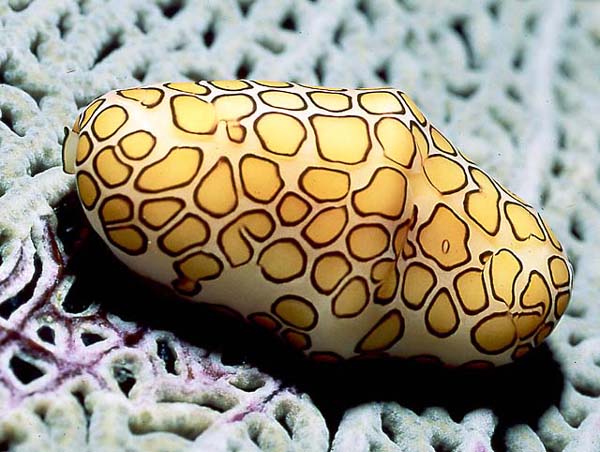
If you examine a sea fan closely you will often find flamingo tongue cowries on them. Cowries are a type of gastropod (like a snail), but are one of the few who extend their fleshy mantle over their shell, so when you look at a live one you are actually looking at its flesh, which is spectacular. Check out this lovely photo my camera never could have taken.

I managed to stay in the water about a half an hour, then returned the the beach to warm up a bit before clouds covered the sky and it became chilly out. I returned to my tent and ate a granola bar, carrots and chips for supper (not exactly gourmet, but it was a 45-minute walk to the nearest restaurant) and I was exhausted. I was falling asleep. I had only been awake for 12 hours.

At this time I was just beginning to appreciate the practical difficulties of my condition. I had somehow acquired a type of arthritis about a month previous, was still awaiting a diagnosis, and found my condition worsening while I waited. I could not keep my eyes open. It's true that I'd gotten quite a bit of exercise this day, but I felt like I'd been awake for 48 hours in some kind of Caribbean decathlon. I was asleep shortly after 8 PM.

Wednesday, May 06, 2009

Update!

Sorry about the lack of entries... I am just about to finish up my exams here and so will have more time to continue the Culebra story in the next couple weeks. (After that, it's off to Wyoming!)


I finally got my underwater pictures back from Wal-Mart. This is good, because the next part of the story involves snorkeling. I got the pictures for free because they were late, which is good, because the care taken in developing them seems to be a little lacking. Some of the prints I was given (which I did not want) didn't make it onto the photo cd (which I did want), and they're all pretty crappy, though this is as much the fault of the cheap camera I used as anything else. Anyway, they will be forthcoming.

Saturday, April 04, 2009

The cold and the cotton stainers

This is a continuation of the story of my trip to Culebra, which starts here.

The Culebra Forum at IslaCulebra.com is a peerless resource for anyone who'd like to visit Culebra. You can search the archives for your topic of choice, or post a new inquiry for residents and frequent visitors to answer. I'd spent a lot of time reading these forums, trying to decide what I needed to bring and what I didn't. There were many requests for information on Culebra's climate and I read through all the replies, how it was really very warm at night, how even cold sleepers had found a flannel sheet was more than enough.

I am a cold sleeper. I always doubt other people's advice on what to bring for sleeping. This time, though, I relaxed my guard a little. If other cold sleepers didn't need much, well. I just brought my fleece blanket.

I was cold.

I spent much of my first night tossing and turning, trying to get the blanket to cover both my wool-sock-shrouded feet and hood-cocooned head, trying to get warm. I was wearing all the layers I could manage and stayed above shivering temperature, but wasn't exactly comfortable. It could have been worse, though. The noodle bed was certainly supportive, if a bit firm.


Noodle bed, "pillow" made from clothing in duffel bag, black fleece blanket on top, hammock and some other items. Don't laugh.

It was cloudy so I decided to explore the island a bit. I thought it was important to find the nicest places early in my vacation so that I'd know where I wanted to spend my time. It wouldn't be any good if I spent the week at the beach I was camping on only to find on the last day that there was one I liked better down the coast, would it?

With my tourist map, the most accurate-looking representation of the land I'd been able to find, I set out to travel from Flamenco Beach, where I was camping, to Resaca Beach. I walked south up the steep road from the coast, looking for the jeep trail the map indicated led northeast to Resaca. After a bit of back and forth I still hadn't found it, so walked down toward the airport to try to find the real road that led toward the beach. I walked past a hill that reminded me just how dry the island is.


It took about half an hour to get to the airport. It was beginning to get hot. I started wandering around the nearby roads, trying to figure out whether I was on the right one. I found myself on another jeep trail that wandered behind the airport, came out onto a brief stretch of newly paved road in the middle of nowhere with benchless picnic tables under cupolas overgrown with grass that looked like they'd been built in a fit of optimism five years ago and then forgotten about, and which soon turned into a jeep trail again.


The sun came out. I walked past houses with TV blaring, houses with men working on cars out front, barky little dogs, lots of chickens, tourists in rented jeeps. I hit on what I thought was the right road and started climbing up to the spine of the island. It was steep as heck. I took a picture of a similarly steep road across the bay.


Walking up to the end of the street was like climbing six flights of stairs. I hadn't put on any sunscreen and even as the sun came out I nixed it for my legs, reasoning that I'd be vertical and there'd never be much direct light on them. I looped around jeep trails, trying to find my way up over the mountain.


Ensenada bay (perhaps the safest from hurricanes in all the Caribbean), with the town of Dewey. In the distance is the island of Vieques.

I passed an old trailer that was disintegrating in the elements, and was struck by the contrast between it and the newer buildings along the bay.


I realized I wasn't getting over the mountain, came down and found the actual right road, which went up and up and up. It turned from an asphalt, house-lined climb to a white concrete road winding through trees with only an occasional vacation house visible through the branches. I walked over a little bridge, peering down into the ravine on one side, and just caught sight of a big iguana before it dashed into the grass. The first time I'd seen one in the wild! And the road kept climbing. I'd been walking for three hours now, on a quest that was meant to take only about an hour. After all, Resaca Beach is just along the coast from Flamenco. Now I was sweating under the hot sun, far away from any beach.

I heard a noise and turned around.


It was the first horse I'd seen on Culebra. There are tons of horse on Vieques, of a special breed called the paso fino. This horse naturally has a very rapid, smooth gait with almost no bouncing up and down and they're sort of oddly fascinating to watch (see this amazing video on YouTube). I interacted with this horse for a bit, forgetting the ache in my shoulders, until I heard another noise behind me.


How cute! The foal was less interested in me than the mother was. I watched them for a bit longer.


Then it was back to the climb. Not long before noon I reached the top of the road. There was a sign for the Culebra National Wildlife Refuge, telling me I was approaching a sea turtle nesting beach. My tourist map said the beach was a half-hour hike down the side of the mountain. A half an hour? Surely not! It covered an itty-bitty distance on the map! I was happy to get into the full shade and began clambering down over basalt boulders through the forest. It wasn't long before I noticed there were lizards everywhere. Tiny brown and grey lizards. I got a picture of one that was little wider than the blade of grass it was resting on:

If your browser allows, click on the image for detail. I assume it is a Puerto Rican anole.

The trail passed down into a spooky mangrove forest, branches and roots everywhere.

These mounds, which I saw many of on the trees, were a mystery to me. This one was maybe a foot and a half high. Its surface looked like lichen.

At last, after exactly half an hour, I broke out onto the beach. The waves were absolutely pounding the coast in a strong wind, and sea spray made the whole scene look fuzzy, out of focus.

The wind was coming in from the northeast and the waves were breaking chaotically, in all directions, up to five feet high or so. I couldn't imagine anyone wanting to swim here. The sand was more orangey than the picture shows. I took a long walk up the beach in the roar and spray, seeing human footprints but no other signs of people. I did see these tracks:

Undoubtably from an iguana, with the tail drag mark. I also found this on the other side of the beach:


A sea turtle nest! You can see the tracks made by the sea turtle and a hollow where I presumed the eggs were buried. I was also able to do a little beachcombing here as there were a number of very small shells, including a real treasure... baby nautilus shells.

The nautilus is different from other mollusks. Take a look at this picture of a nautius shell sliced in half. Unlike a snail shell, which is all open on the inside, a nautlius shell has chambers that are closed off except for a small tube in the wall of each. A nautilus can control its bouyancy by inserting part of its body into the different chambers and pumping as many as it likes full of gas. Thus it cruises the ocean, catching food with its tentacles, much more like a squid than it is like a snail, though all are related. At any rate, nautilus shells are unmistakable. My little specimens, less than an inch in diameter, had the chambers and tubes just like the big ones you can find for sale as home decorating items.

Before I left I visited the far distant end of the beach, looking again for that elusive jeep trail the map said was supposed to exist, to find nothing but a mysterious cabana erected by some vanished visitor:


I slipped back into the forest and began my hike back to the road. I did see another kind of lizard, a Puerto Rican ameiva. These were much bigger, though they wouldn't let me get close.

Perhaps the oddest thing I saw, though, was this:

These bugs are called cotton stainers, because their bodies can get crushed into the cotton they feed on. I would guess they're mating, though possibly they're playing rugby.

Tune in later for the rest of my adventures!

Thursday, April 02, 2009

The first day, part 2

This is a continuation of the story of my trip to Culebra, which starts here.

When I got off the plane in Culebra, my first thought was that it smelled like White Sands National Monument in New Mexico (as detailed in this post from last summer). I waited by the baggage claim for my bags. The baggage claim consisted of a large hole in the wall next to the glass doors leading out onto the runway. The attendant put our belongings on a cart, wheeled it about twenty feet, bypassed the doors, and handed us our bags through the large hole in the wall.

I put my backpack on my back and slung my duffel over my shoulder and walked into town. Culebra looked, well, a lot like Vieques, the sister island I had visted a few years ago.

The houses were all made of cinder blocks, with metal shutters, for protection against hurricanes. Some were painted in colors that looked like they belonged in the Caribbean. Some were just, well, cinder blocks. Most places had satellite dishes (often several). There were lots of chickens and roosters in the street. The hills did seem more dramatic here, going right up to a ridge then coming down sharply to the ocean again on the other side.

I was heading for Colmado Mayra, which I'd heard had the inflatable pool rafts (one of which was to be my sleeping pad). Closed till 3:30! It was one o'clock. So I checked out La Cava, a nearby gift store, and saw that they had large inflatable turtles. Hm.

I wandered down the street until I came to the water, my bags growing heavy. I was at the ferry dock. There were shaded benches and I sat down to write in my journal. The aqua water stretched away to Vieques in the distance. I could see Vieques's Mount Pirata, which we'd wanted to climb years ago but were turned away by men with guns. They were U.S. agents monitoring drug trafficking activity on the 900-foot high "mountain."

Also at the ferry dock was a man vending food from a cart. He had a whiteboard out on which was written, "Kiosko pide que hay," which seemed to me to translate as "The 'ask for what there is' kiosk." Perhaps there was some idiom in use that I wasn't familiar with, but the title seemed very zen. Happiness comes to those who ask for what there is, rather than what there isn't?

Colmado Mayra finally opened at about 3:40, and the crowd that had gathered outside bustled in. For me it was like visiting a market in New York City... the carts were smaller than usual, the aisles just wide enough for one to go through, all the horizontal space condensed. I got some fruit and chips and a can of chili (with a pop-top, necessary as I couldn't bring my swiss army knife with me).

They did not have inflatable rafts.

They did have wacky noodles, which I stood in front of for a long time. I was trying to imagine how they might function as a bed. Then I tried to imagine how the giant blow-up turtle might function as a bed. The problem with the turtle, I imagined, was that it seemed to have one large, open main air chamber, where most of my body would be. It would be difficult to keep this pumped enough so that my butt and shoulders weren't simply resting on the ground with large, useless pockets of air surrounding them. So I purchased five wacky noodles, which would make a bed nearly as wide as my thermarest at home.

I then struggled to climb into a publico, or public car, with a backpack, duffel bag, bag of food, and five wacky noodles in my arms.

I was driven over the ridge of the island and down a long slope, past the lagoon, to Flamenco Beach. I paid the driver the $3 fee and asked around for the office. In the office, I paid for a week's stay at $20 a night. The woman at the desk wanted me to stay in area A or B, both of which were empty. I told her I'd heard E was nice. She said A and B were very nice, and they were empty! I had heard, but did not tell her this, that during the weekends A and B were crammed full of weekending Puerto Rican families blaring loud music. I said maybe I would stay in D. She said okay, but be sure to check out A and B!

I walked down the sand road with the ocean on my right, past a narrow line of mangroves, and the camping areas on my left. Each area was bordered by a fence in a different color. There were no numbered sites, but picnic tables, barbecue areas and trees scattered around each area. It took five minutes to walk all the way to section E. I walked back and forth along the sand road several times trying to decide where was truly the best place to camp. Finally I settled on D, which was nearly deserted and far from the haunts of the weekend crowds, and threw down my stuff.

The funniest thing was that in the hour I'd been trudging around, through town and camp, no one had asked me why I was carrying five wacky noodles. Perhaps such things are commonplace in Puerto Rico.

I set up my tent and got inside and noticed there was a bunch of sand in it already. The sand was blowing in through the screen! I didn't think of beach sand as being smaller than no-see-ums, but apparently some fraction of it is. Okay... actually, I did know this, being a geologist. I have separated beach sand out myself with a succession of twenty increasingly finer sieves. I just didn't think, you know, it would come in the screen.

Above, area de acampar D, my tent in foreground.

View toward the beach. It was really very close, just across the road and over the path.

And the beach.

I got changed and went for a swim, with my snorkel and mask, because hey, why not. The water was cold! I swam up to some of the near-shore reefs but they only had some algae and a few juvenile fish. So I puttered around near the beach. I watched a larger fish, one of the many silvery kinds that swim over the exposed sandy bottoms, feed by biting at the sand and spitting things out. I followed it for a long time. Then I got out, got changed and put together my noodle bed with some duct tape I'd brought.

It got dark and I was chilly so I went for a jog on the beach. At one point I felt sand hitting the tops of my trailing feet as I ran and realized I was ploughing through someone's sandcastle. The sky had become cloudy and there were no stars, but the world felt large.

Sunday, March 29, 2009

The first day and the last virgin

What would you think if I told you there was a tiny Caribbean island that was mostly undeveloped, where the miles of beaches were pristine and often deserted, the waters crystal clear, the locals friendly and mostly English-speaking; where there was almost no crime, you didn't need a car to get around, could stay for $20 a night and eat for $8 a day, and didn't need a passport to get there?

"Sign me up," right?

But there's a paradox in writing about any paradise. The reason this island sounds so great is because it hasn't been overrun by hordes of tourists and developers--because hardly anyone knows about it. And though I tout my blog as being "unseen," which it mostly is because I'm too lazy to publicize it, I'd be naive to think it won't result in friends or internet-surfing strangers' turning up on her doorstep, bags in hand. "La ultima virgen"--the last virgin, as this island is sometimes called--will continue to slowly grow in popularity until she's a virgin no more.

So I had to think a great deal before I decided to tell my story at all, and in the end it comes down to the fact that of course paradise does not exist. Every place has parts that are ugly, parts that are boring, parts that stink. I will talk about these and then you may decide for yourself whether to take this vacation to Culebra.


I woke up at 1:30 AM on the Thursday before Spring Break to drive to Bradley International Airport outside of Hartford. We have an airport in Rhode Island, a perfectly good one, but it seems that everywhere I want to go can be gotten to by going through Hartford for about $100 less. I'd booked my ticket on Hotwire.com, which let me search for the best prices within a flexible range of dates. I was off to San Juan, Puerto Rico, for $264 round-trip. I could have had a flight on a Wednesday for less, but I'd have missed chem lab. It occurred to me that I was essentially paying $30 (on top of my tuition) to pour acetic acid into test tubes for three hours, but hey, that's college. (It turns out that flights out of Logan were about the same price but, unlike Hartford, some were non-stop, which could be useful to know for the future.

Above are the bags I took with me. I have a little black duffel that's a bit smaller than the standard carry-on; in it was my tent, hammock, towel, blanket, whisk broom and a couple bagels, with assorted underwear stuffed in the corners. I vastly prefer this bag to the ones with wheels. The wheels drive me crazy. The last such bag I tried I was too tall for, and kept kicking the thing with my heel as I walked, tipping it over every 20 feet. But my duffel I can sling over my shoulder and walk like a normal person.

My backpack had my first aid kit, water socks, snorkel, water bottle, swimwear, five t-shirts, reading material, journal, toiletries, and some more snacks. I packed things this way so that the backpack would be heavier, having two shoulder straps instead of one.

I hadn't packed my sleeping pad, as there was no room and I'd read I'd be able to buy an inflatable raft on the island.

I got to the $6-a-day economy lot at Bradley and got out to wait for the shuttle. It was cold, maybe below freezing. I was wearing my sneakers and the only pair of long pants I'd have on the island, which converted by zippers into the only pair of shorts I'd have. I also had a t-shirt, white button-down shirt, sweatshirt, rain jacket and hat on. I was carrying enough stuff on my body to be able to fill another backpack. It didn't help against the cold though.

By 9:30 AM, the early morning already seemed like yesterday. I was sitting on a flight from Philadelphia to San Juan and the memories of my earlier drive and first flight were already hazy, as if eight hours of sleep separated me from them. I had been moved to an exit row, which had a ton of leg room and which I decided I liked very much. But I thought I ought to be prepared in case we had to crash into the Hudson or something, so I was reading the emergency pamphlet.

One page showed the conditions under which the emergency door was not to be opened, and I paid special attention to these. It showed a big red circle and slash over the handle, as a cartoon man peered out through the window to see, in successive panels, (1) grey swirls, (2) orange streamers, (3) blue waves, and (4) yellow confetti. In the absence of any accompanying text, I assumed this meant that I should not open the door in the case of (1) smoke, (2) fire, (3) water, or (4) parties.

We landed at San Juan unassailed by parties, and I beat it out to the street where the taxis gathered. My sense of hurry was instilled by a conversation I'd had a week ago:

"Air Flamenco, ¿cómo le puedo ayudar esta mañana?"

"Uh... do you speak English?"

"Yes."

"How much would it cost for me to fly from San Juan to Culebra on March 12?"

"Round trip it is $105."

"Oh! I'd like to book that, please."

"We have an 8:30 flight, a 10:45, a 1:00, and a 4:30."

"The 1:00, please."

"Okay." Long pause. "You know we are at Isla Grande, right?"

"...Yes!" Err, they were? Isla Grande was San Juan's smaller, regional airport. Not the one I was flying into. "Um... if my flight gets in to San Juan international at 11:30, will I have time to get to Isla Grande?"

"Do you have checked baggage?"

"No," I decided.

"Then if there is not too much traffic, you can make it. If you miss it, there is a $15 fee to rebook."

San Juan has a "tourist taxi" system with special taxis that charge set rates for travel to the various tourist districts of the city. I stood in line for the next taxi, told the attendant where I'd be going and how many bags I had, and she printed me a bill for $16 (this didn't include a tip; tipping is the same in Puerto Rico as on the mainland). The bill was handed to my taxi driver and I climbed in.

The San Juan I saw from my tinted window was full of art, both the kind deliberately installed by the city and the kind delivered by aerosol under cover of darkness. There were brightly-painted sculptures everywhere. There were tall apartment buildings with steel bars fully enclosing every balcony, even on the 20th floor. There were palm trees and pointy volcanic mountains in the distance. My taxi driver was asking me something. After some difficulty comprehending her in English I started speaking in Spanish, which prompted a rapid-fire response in Spanish that I understood equally little of. There is a Caribbean accent particular to Spanish-speakers of this area, and I cannot adequately describe it except to say it sounds nothing like the Colombian accent of my Spanish teacher.

In the end we had the same conversation, first in bad English and second in bad Spanish, about the fact that it cost about $50 to get to Culebra by plane but only $2.50 to get there by ferry. This is quite true, but there remains the fact that it costs around $70 to get to the ferry by taxi. A fine option if you're traveling with a group, but I was not. My friends were either too poor, to busy or too both to come with me.

I should mention that there is a third way to get to the ferry: by publico, or public car. These vehicles carry locals around Puerto Rico, stopping in each town to pick up or drop off more folks. The trip from San Juan to Fajardo, where the ferry launched, might have cost only $6--however, between the bus ride from the airport to the publico stop, the long circuitous route, and the possible necessity of taking the last ferry of the day over to Culebra, I might not have arrived in the campground until 10 PM. I'd have been traveling for twenty hours. Add to this the fact that many drivers apparently try to squeeze as much money as possible out of tourists, and the publicos didn't look so appealing, despite my love of a bargain. So I was traveling by air.

Here we are at Isla Grande airport.

It has various desks for the small regional airlines...

And a ritzy lounge where you can wait for your flight. What it does not have is TSA security. No lines, no x-ray machines, no baggage claim (unless you count "come get your stuff off this cart"). I was flying Air Flamenco, which combines relatively low prices with a fair number of flights per day. Other small airlines flew out of San Juan International for about $170, offered fewer flight times, or required you to get a party together before they'd book a flight. Air Flamenco charges $0.60 for each pound of baggage over 25 pounds, but I watched as they weighed my bags and though they came to about 27 pounds, I wasn't charged.

That is to be my plane, on the left. Each of the passengers is asked for his or her weight, and the crew arranges them so as to balance the plane. I was told to sit on the right side of the back seat by myself, and I climbed in.

The addition of the other seven passengers made for a tight fit.

Takeoff was fun, and cruising more so as these planes fly low enough to really check out the landscape. I must say, though, if you are thinking of taking one of these planes, that they are extremely loud. If your ears are sensitive you might want earplugs. All the bags on the plane, no matter their size, must go in the back compartment so things are balanced, but I kept my camera with me so I could take photos as we flew.

Suburban sprawl of San Juan. Puerto Rico is very densely populated in general (although, of course, most of it isn't quite this dense).

The rainforest of Puerto Rico's northeast. The mountains are often in the clouds, as they are in this picture. El Yunque National Forest is the only tropical rainforest belonging to the U.S., and it's a wonderful place to visit.

Here we flew past the end of Puerto Rico and out over the open ocean. The water was aqua and I could see birds, giant even from our height, coasting over the waves. They were frigates.

We approached the island of Culebra. The larger land masses in the background are both part of Culebra, whose coastline is sinuous.

Finally a view of Flamenco Playa, where I'll be staying for the week ("playa" is Spanish for "beach"). You can see the waves breaking on the reefs offshore, and the lagoon where many migrating birds can be found.

And the town of Dewey, in background. This is the only town on Culebra. It has small stores, restaurants and hotels.

Learn more about Culebra and my trip in the following entries!

Wednesday, March 25, 2009

Yes

I will be posting here very soon about my trip to Culebra. I should be able to begin this weekend. For now, here's a photo:

This was the view I had every morning, taken maybe 40 feet from my tent.

Sunday, December 21, 2008

Riding the Yeti

This is a sledding adventure.

We began making plans on Friday afternoon to go sledding on Saturday. Sledding was essential. The semester was finally over, and this would be the first weekend in what felt like years that I wouldn't have to do homework half my waking hours. Plus, we were going to get a ridiculous amount of snow. Nine to thirteen inches! I'd been in the hospital for our only big snowstorm last year, so I especially didn't want to miss out on this one.

Saturday around noon, as the snow began to tail off, Pamela and I shoved two sleds and a sno tube into the car and went to pick Katie up. We had decided to take Pamela's car as it has all-wheel drive. However, we found that even though Katie's driveway is shared by two houses, at least one of which has five adults living in it, no one had bothered to shovel or plow it. Pamela tried to back in but got the car only halfway into the driveway before it started spinning its wheels. Impatient cars backed up on Route 138 and then started to go around us. There was nothing we could do but leave the car there and go inside for Katie.

Katie had no boots. She was wearing some sneakers. I looked at them and visualized the snow packing in around the ankles as soon as she stepped outside. We went out and I bounded to the car, taking big leaps through the twelve inches of snow like hares do on nature programs. The car was still there with its butt up in the snow and its nose in the wet street, and we discussed where to go. None of us grew up in Rhode Island and the only good place I could find online was half an hour away. I also offered one of the places I used to go in Connecticut, which was a little farther, but there was the promise of rotisserie chicken at my favorite restaurant afterwards. This sold Katie.

We followed the poorly-plowed 138 to the highway where, as soon as we accelerated, Pamela's car began juddering. This behavior was new to Pamela. The highway was clear of snow but we were reduced to going 40 mph up hills, Pamela's hands bouncing on the steering wheel. It was about two o'clock when we got to Fort Griswold in Groton.

Fort Griswold is a Revolutionary War fort on a hill overlooking the broad Thames River. On September 6, 1781, a British expedition led by Benedict Arnold swept up the river to attack stockpiles of goods and naval supplies. They burnt New London on the other side of the river; nearly the whole town, buildings, wharves and ships, was destroyed. In Groton they advanced on the fort but its commander, Colonel Ledyard, determined to hold it. When the British burst through he ordered his men to stop fighting. He surrendered to the British and they accepted his sword, and then killed him with it and went on to massacre or mutilate more than 80 of the fort's defenders.


This grim scene is now a park used for exercise, contemplation, festivals, firework viewing and sledding. Here is Fort Griswold in the summertime, with sledding slope to the right, mostly out of the picture. I believe sledding was a very important activity used in the defense of the early Colonies.


A few families were sledding past ancient battlements and powder magazines as we arrived. Katie went down first to try out the lime green, bullet-shaped sled she'd bought at Benny's the previous night, but the sled was a bit too short. It wanted to be a saucer, and kept turning about and dumping Katie off the side. My longer red sled was a bit more of a success. Here, Pamela and Katie get ready to ride it down together for extra momentum.


The hill is steep enough for some really rocketlike speed if you have the right vehicle with the right amount of weight in it. However, this particular trip ended in another wipeout, as captured by my zoom lens:

If your web browser allows it, click on the picture for detail.

My sno tube proved to be the best implement for the thick, powdery snow, and we all enjoyed going down on it, in ones and twos. This had a graphic of a Yeti on it and was also purchased at Benny's. I also used the red sled a bit. Once, on coming back up, Katie informed me that the tube had blown away into a ditch. The ditch was a ways away and so deep I couldn't see the tube. I slid down inside and made my way down until I came to the tube, and then continued to where the ditch let out, as the sides were four feet high and lined with snow-slippery rocks. As I went along I found a very large banner that had also blown into the ditch. I wondered if it would make a good toboggan, but I left it there. However, by the time I got back up to the top of the hill, and turned around, there was Pamela:

The banner read, "THE SPOT - LUNCH SPECIAL - Mon. Thru Sat. - All Lunch Entree Specials - $6.99." It also had a large picture of a beer with lime on it. Pamela very much wanted to use this as a toboggan. She said, "It's a sign... from God! That we were meant to sled with this sign!" Katie did not. She was not optimistic.


So Katie stood aside as Pamela recruited a couple strangers and we sat down upon the thing. As I gamely grabbed stranger Dave's legs after he sat behind me, I thought that Dave looked a bit familiar, shrugged it off. We got a push and then slid... very... slowly down the hill. Not a huge success, but no wipeout.

At some point around this time, a family with a very energetic black dog arrived. As people slid down the hill, the dog would chase after them, nearly keeping up, then race back up the hill. We all thought this was incredibly cute. I went down next on the sno tube, on my belly, and the dog chased after me. How fun! And then, all of a sudden, the dog was JUMPING ON MY HEAD and my face was forced downward into a foot of snow. Somehow, this did not diminish my speed. I was still rocketing down the slope at approximately infinity miles per hour, snow feeding directly into my shirt beneath my scarf and packing into my mouth and nostrils like thick cotton wadding. When I finally came to a stop, I picked my face up--it was burning with cold--and tried to cough and spit out all the snow, which was so packed it was almost a solid block of ice in my mouth. I rolled about in a slobbery, indignant fashion for a bit, spluttering, then trudged up the hill, throwing dirty glances at the dog. Snow still clung to my eyebrows. The snow in my shirt had mostly melted already.

I wanted to go down together on the sno tube, all three of us. Pamela and Katie didn't see how it could be done. I insisted that it could indeed be done, as I'd gone down on a tube of the same size with four other people once, but they still couldn't quite imagine how we'd do it. I eventually got us all sitting, facing outward and linking arms. This did not instill a feeling of security, as we weren't holding onto the tube, but nothing about sno tubing really installs a feeling of security. We went down the hill fast, Pamela yelling, and slid for a record distance!

After that we mostly stuck to this triple-tubing technique. We did try one variation in which Pamela wanted us all to lie on top of each other. I lay down on my stomach on the tube but had a vision of my back being broken and quickly rolled over before anyone else could flop on top of me. I ended up sort of curled on my side, and Katie curled up beside me with a confused expression. Pamela gave up telling us we were doing it the wrong way and splayed herself over top, and we were off down the hill in an awkward configuration that felt a bit wrong, something like putting your shirt on backwards. But we were having fun. Here, Katie and Pamela pause from the activity.


The hill was not evenly sloped. Over on the right side were some undulations, a bit divot and a big ramp someone had built right on top of one of the undulations, for maximum air. Pamela was terrified that we would go over one of the "jumps," which we never did, but we did end up going into the divot a couple of times. This was sort of like a jump, but not. Instead of feeling a lightness and then slamming into the snow, you just sort of slammed hard, butt jamming into your lumbar vertebrae, without much warning. We did have a few wipeouts near the end of the hill, as well, in which it was driven home that the painful thing about sledding is not really going over bumps but having your adult friends fall on top of you at high speed, their various elbows and knees finding all of your organs.

Pamela wanted to use our "toboggan" again before we left for the evening. But with six people. She recruited Dave and friends and Dave asked where we were from. Then he asked where he might have met me before. Suddenly I knew. I had been friends with his girlfriend years ago, and we'd all gone out to dinner once at a hole-in-the-wall Mexican place. He remembered me by my voice. (This wasn't the only connection of the day, in fact; I recalled at some point that Fort Griswold was named after the same Griswold to whom my boss from my Arizona job this past summer was distantly related.)

As people piled on the banner toboggan, I took pictures:


I got on behind Dave and one of his friends gave us a push and then jumped on back, grabbing my shoulders and standing on the back of the banner the entire way down like a sled dog musher with a bundle of human cargo. No one fell off. We still didn't get very far--being scientists, we postulated that our butts created drag points on the bottom of the flexible laminated sheet--but I think it was a success.

I had been looking at the undulations on the right side of the hill throughout the afternoon, and I decided I wanted to go over them. Specifically, to go over them fast enough to catch some air. Nobody was with me on this, which I expected, but I considered it a safe way to confront one's fears. I had a soft, air-filled sno tube with a comforting picture of a Yeti on it and there was a foot of snow. So off I went. I rode the tube on my knees, reasoning that in the event of a wipeout I would rather land on these than on my stomach or rear end. The first few runs I went over the undulations but didn't manage to lift off the snow much, at all.

Katie and Pamela tried again to line me up with the big manmade jump. I went down once more and began to turn so that I was facing completely backwards. I was going quite fast. I thought I was headed for the jump... and then... yes... I was launched like a catapault into the air. It felt like I was up about fifteen feet and it all happened very fast, so that I only had time for about four half-formed thoughts:

I thought, "This is very high, maybe too high."

I hit the snow hard, chest first, pain immediately in my ribs on the right side. I thought, "I hope I haven't broken a rib."

I thought, "I can't breathe."

After I tried to suck in a few breaths, I thought, "Why can't I breathe?"

I flopped about weakly and lay there gasping, really gasping. I could only pull a thin thread of air into my lungs each time. I sounded like what you imagine dying people sound like. I was not worried about the breathing... more about my bones... I half wanted people to show up now in case I'd broken something, but I didn't want them to, because I thought the sound of me breathing would scare them. After what felt like a minute of noisily squeezing thimblefuls of air in and out, Dave's friends appeared and asked if I was all right. All of a sudden, I was able to take a full breath, and it didn't hurt my ribs at all.

"Yeah, I'm fine!" I said, surprising myself.

"Did you get the wind knocked out of you?"

"Yes," I said.

I walked back up the hill, feeling fine except for the bruised skin over my ribs. We made a number more triple-rider runs and as four o'clock came around we departed the park for antique shopping. Katie could not feel her feet. After enjoying the antiques we went to Neon Chicken in New London, which is one of the best restaurants in the world, got a take-out meal of a rotisserie chicken and four pints of mashed potatoes, gravy, stuffing and butternut squash, four cornbreads and six cranberry sauces for $24, and went back home and ate. We all felt like a nap after that, but it was something like nine o'clock and so we watched a movie and then there was bed.

Friday, November 28, 2008

Hate it

The mashed potato adventure is no kind of adventure. I don't want to put up posts from my everyday life. Everybody else's blog is about their everyday life. It's no good. So, pending an actual adventure... I am already planning to be in Wyoming next spring... we will return to our previous fare, that being stories. About things happening. To fake people.